The allure of gothic statues lies in their ability to evoke a sense of timeless mystery and dramatic spiritualism. From the towering gargoyles of medieval cathedrals to the intimate melancholy of cemetery art, these works are more than mere decorations; they are architectural and emotional statements that blend faith, fear, and profound beauty.
For architects, interior designers, and collectors, selecting a piece that captures this essence requires an understanding of both the artistic tradition and the material science behind the sculpture. Whether the goal is to recreate a haunting European atmosphere or to install a focal point of religious reverence, the choice of medium—from weathered bronze to carved marble—defines the piece's longevity and impact.
In this guide, we explore the technical nuances of creating high-fidelity gothic art and provide a framework for evaluating the quality and authenticity of professional sculptures, ensuring your investment stands as a testament to classic artistry.

Defining the Essence of Gothic Sculptural Art

Gothic art is characterized by its dramatic verticality, intricate detail, and a preoccupation with the intersection of the divine and the earthly. Unlike the balanced proportions of the Classical era, gothic statues often utilize elongated forms and emotive expressions to lead the viewer's eye upward, symbolizing a spiritual ascent.
The complexity of these works often manifests in the "horror vacui"—a tendency to fill every available space with ornate carving, foliage, or symbolic figures. This makes the production process incredibly demanding, requiring a high level of precision in both the initial clay modeling and the final casting or carving phase.
Understanding the distinction between "Neo-Gothic" revivals and traditional medieval styles is crucial for buyers. While the former often focuses on visual grandeur and romanticism, the latter emphasizes theological narratives and raw, sometimes grotesque, realism.
Material Selection and Technical Craftsmanship Factors
The enduring nature of gothic art depends heavily on the casting technique used. Traditional lost-wax casting has long been the standard, but advanced methods like silica sol casting are now employed to achieve higher precision and eliminate common defects such as aerugo or surface porosity.
Bronze remains the premier choice for outdoor gothic figures due to its atmospheric patina and structural strength. When cast using silica sol technology, the bronze is less susceptible to the permanent rust and corrosion that typically plague lower-grade alloys in humid or coastal environments.
Marble, conversely, offers a luminosity and softness that is essential for angel statues and religious figures. The challenge in marble carving lies in the fragility of the intricate gothic lace-work and drapery, which requires a master's touch to ensure the sculpture does not suffer from structural stress fractures.
Architectural Integration and Modern Application Scenarios
Modern applications of gothic sculptures extend far beyond traditional cathedrals. In contemporary luxury real estate and boutique hotel design, these pieces are often used as "anchor elements" to create a sophisticated, historicist atmosphere in entryways, courtyards, and private libraries.
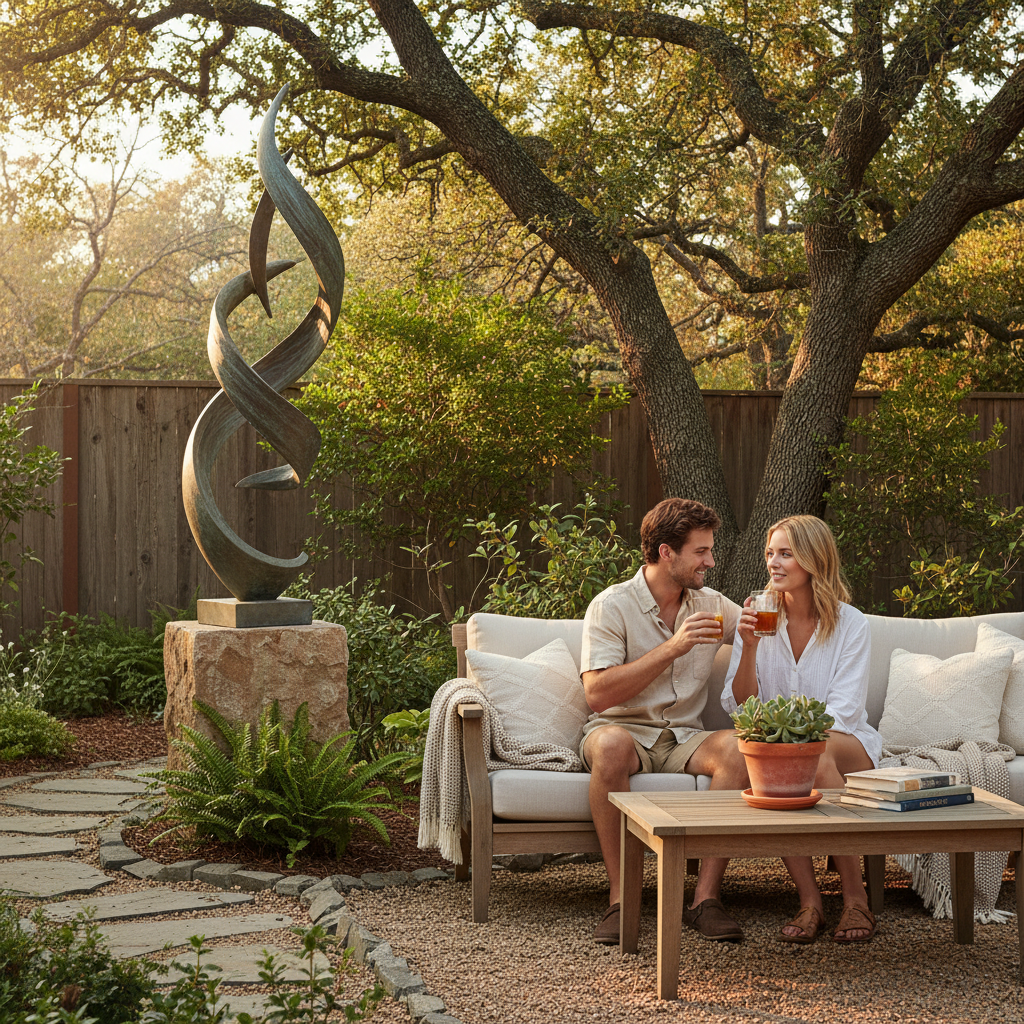
For outdoor environments, such as botanical gardens or private estates, bronze water fountains and guardian lion sculptures provide a sense of permanence and authority. The integration of gothic elements into water features adds a layer of theatricality, blending the sound of flowing water with the silent strength of cast metal.
Indoor residential use has also seen a rise in "functional art," where gothic aesthetics are blended with modern utility. An example is the use of bronze cast sculptures as legs for coffee tables, transforming a piece of furniture into a museum-grade installation that serves as a conversational centerpiece.
Evaluating Quality Through Material Durability Metrics
When assessing the viability of a sculpture for a specific environment, one must look at the material's resistance to environmental stressors. Bronze and marble have vastly different degradation curves depending on whether they are placed in a climate-controlled interior or exposed to urban pollutants.
Advanced casting technologies significantly shift the performance benchmark. By reducing impurities during the casting process, manufacturers can increase the sculpture's resistance to oxidation, which is a critical factor for public installations in European or North American cities.
gothic statues Performance Metrics
The data suggests that sculptures produced with high-grade casting techniques maintain their surface integrity significantly longer than those produced via standard industrial methods, reducing the need for frequent professional restoration and chemical cleaning.
Procurement Considerations for Custom Gothic Commissions
Ordering a custom gothic piece is a collaborative process that begins with a deep dive into historical references. Because gothic art is so detail-oriented, the gap between a concept sketch and the final product can be significant if the manufacturer lacks a professional design team.
Buyers should prioritize manufacturers who can provide a full design pipeline: from initial CAD drawings and 3D rendering to a physical clay mold for approval. This ensures that the proportions—especially the characteristic verticality of the gothic style—are captured correctly before the expensive casting process begins.
Furthermore, consider the "installation footprint." Large-scale gothic statues, particularly those in bronze or marble, require specific foundation supports. Professional suppliers should be able to advise on the weight distribution and anchoring methods needed to ensure safety and stability in outdoor settings.
Evolution of Gothic Aesthetics in Contemporary Spaces
The current trend in gothic art is moving toward "eclectic fusion," where traditional religious and architectural motifs are paired with minimalist modern environments. This contrast creates a visual tension that highlights the sculpture as a piece of historical art rather than a mere architectural accessory.
New materials are also playing a role. While bronze and marble remain the gold standard, the use of corten steel and fiberglass allows for more experimental, oversized abstract interpretations of gothic themes. These materials enable a play with scale and texture that was impossible for medieval craftsmen.
We are likely to see an increase in "biophilic gothic" design, where sculptures integrate natural elements—such as climbing ivy or integrated water systems—mimicking the way ancient cathedrals were reclaimed by nature over centuries, adding a layer of romantic decay to the aesthetic.
Comparative Analysis of Sculptural Material Options
Choosing the right material for a gothic piece involves a trade-off between aesthetic desire, environmental constraints, and budget. While bronze offers the most prestige and durability, marble provides an unmatched spiritual purity, and fiberglass offers flexibility for large-scale decorative projects.
The following table compares the primary materials used in professional sculpture manufacturing to help buyers determine the best fit for their specific application.
| Material Type | Primary Use Case | Durability Level | Maintenance Need |
|---|---|---|---|
| Cast Bronze | Outdoor Landmarks | Exceptional | Low (Patina care) |
| White Marble | Religious Altars | High (Indoor) | Medium (Dusting) |
| Corten Steel | Modern Abstract Art | Extreme | Very Low |
| Fiberglass | Themed Interiors | Moderate | Medium (Coating) |
| Cast Iron | Industrial Gothic | High | High (Anti-rust) |
| Stainless Steel | Avant-Garde Gothic | Exceptional | Low (Polishing) |
Ultimately, the decision should be guided by the intended lifespan of the piece. For heritage projects meant to last centuries, the combination of silica sol bronze or premium marble is the only viable choice.
Frequently Asked Questions
Conclusion
The acquisition of gothic statues is an investment in a legacy of artistic expression that spans nearly a millennium. Whether you are seeking the ethereal grace of a marble angel or the imposing presence of a bronze guardian, the key to success lies in the synergy between historical authenticity and modern manufacturing precision.
By focusing on material integrity, advanced casting techniques, and a rigorous design process, you can ensure that your sculpture serves as a timeless focal point. Readers evaluating these options can review the relevant product and company information available through www.firststatue.com.