The global market for religious and decorative art is seeing a significant shift as buyers increasingly seek a balance between aesthetic grandeur and budgetary constraints. Specifically, the demand for cheap angel statues has grown, not necessarily as a request for low-quality items, but as a search for cost-effective manufacturing solutions that do not compromise structural integrity.
This trend is driven by the diversification of application scenarios, from private memorial gardens to public architectural ornaments. The challenge for the industry lies in the material science—how to reduce the cost of production while preventing common issues such as oxidation and surface degradation, which often plague lower-priced alternatives.
This analysis examines the manufacturing paradigms that allow for affordable yet durable sculpture production, evaluating the trade-offs between different materials and casting techniques to help buyers make informed procurement decisions.


Achieving affordability in sculpture production requires a strategic selection of materials. While bronze remains the gold standard for durability and detail, alternatives like fiberglass and marble are often utilized to meet different budget tiers. The core objective is to match the material's physical properties with the intended environment.
For instance, fiberglass offers a high strength-to-weight ratio and lower raw material costs, making it ideal for large-scale decorative pieces. In contrast, marble provides a timeless aesthetic but requires more intensive carving labor, affecting the final price point.
When sourcing sculptures, buyers often focus on the "cheap" aspect without analyzing the technical specifications that define value. Key parameters include the alloy composition for metal works and the grade of stone for carvings. A lower-priced statue may use a thinner casting wall, which reduces material cost but can compromise long-term structural stability in outdoor settings.
Size scalability also plays a critical role. Professional manufacturers can produce works ranging from miniature desktop versions to life-size or monumental scales. The transition from a 1:1 clay model to the final cast is where the most significant cost-value trade-off occurs; precision in the initial model reduces waste and expensive corrections during the casting phase.
Furthermore, the finish—whether it be a natural patina, polished surface, or specialized coating—impacts both the visual appeal and the maintenance requirements. Understanding these specifications allows a buyer to distinguish between a product that is simply "cheap" and one that is "cost-optimized."
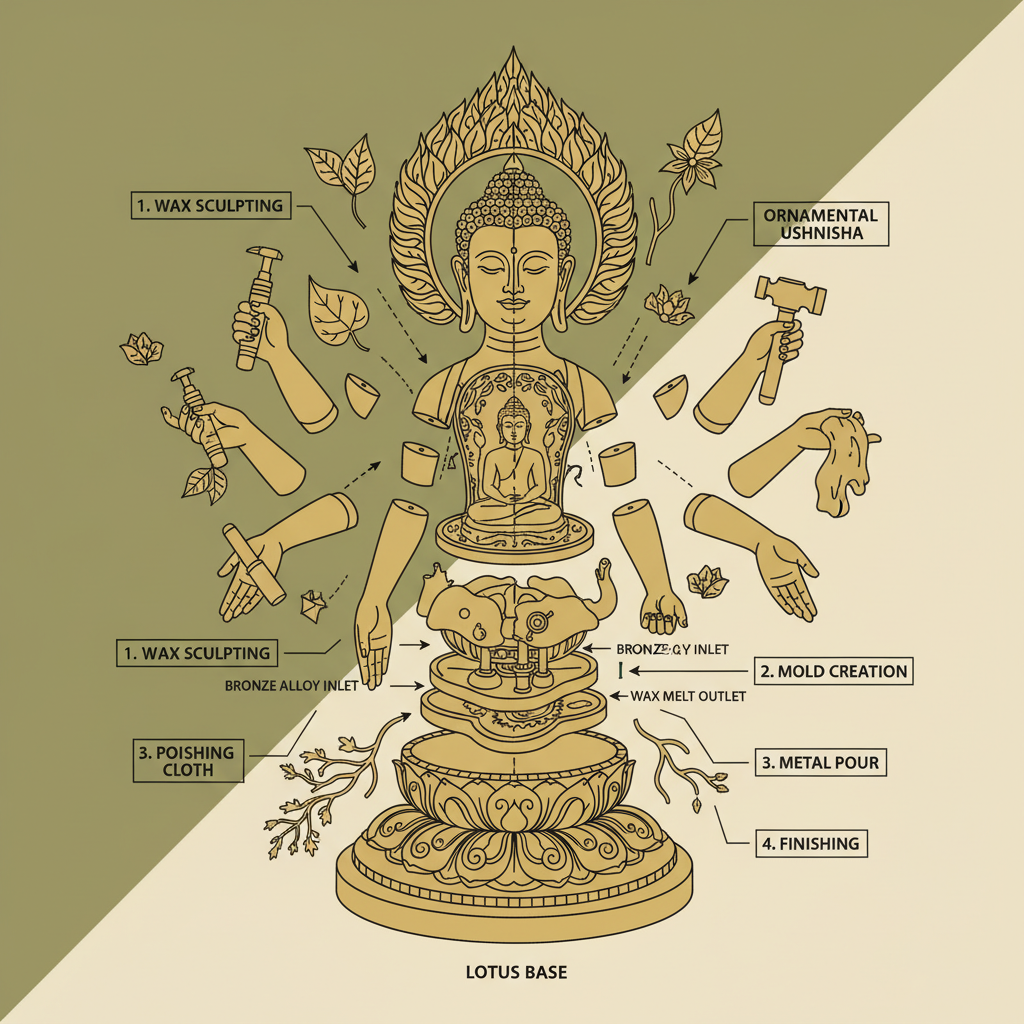
The traditional lost-wax casting process has been the industry standard for centuries, yet it often leaves the sculpture susceptible to aerugo (copper rust) and surface imperfections if not treated with expensive post-processing. This often drives up the cost of maintaining the sculpture over time.
From an engineering perspective, the silica sol method reduces the porosity of the metal, leading to a more dense and resilient final product. This is particularly vital for sculptures exposed to harsh weather conditions in gardens or public squares, where moisture and pollutants would otherwise accelerate degradation.
To quantify the value of different sculpture configurations, we must look at the relationship between initial investment and maintenance frequency. A low-cost sculpture that requires annual restoration is more expensive over a ten-year lifecycle than a mid-range sculpture with advanced casting technology.
The following assessment ranks common sculpture materials based on their relative engineering performance across key metrics: weather resistance, detail retention, and cost-to-life ratio.
The application of affordable sculpture varies by environment. In residential garden decoration, a combination of marble and bronze is often preferred for their classic appeal and ability to blend with natural landscaping. For public spaces, such as squares or corporate courtyards, larger-scale bronze or stainless steel works are more common due to their resistance to vandalism and environmental pollution.
Another representative scenario is the use of religious sculptures in cemetery headstones or memorial parks. In these cases, the material must not only be cost-effective but also emotionally resonant and physically enduring. The ability to customize these pieces based on 3D drawings or CAD renderings ensures that the final product meets specific theological or personal requirements without the need for expensive trial-and-error iterations.
Customization is moving away from purely manual processes toward a hybrid digital-analog workflow. Modern studios now utilize 3D modeling, CAD, and graphic rendering to visualize the final sculpture before any material is touched. This digital phase allows for precise adjustments in proportion and pose, significantly reducing the risk of costly mistakes during the physical carving or casting stages.
Once the digital design is finalized, a 1:1 clay model is typically created. This remains the most critical step in the process, as it allows artists to refine the tactile details that a computer cannot fully capture. The clay model serves as the definitive blueprint for the subsequent molds, ensuring that the final bronze or stone piece is a perfect realization of the original vision.
This evolution in design enables manufacturers to offer customized services that were previously only available at elite price points. By streamlining the transition from 3D drawing to physical product, the industry can provide bespoke sculptures that are both unique and economically viable.
Selecting the right configuration requires a balance between the intended use case and the available budget. A "budget" sculpture is not defined by a lack of quality, but by a specific set of engineering trade-offs, such as utilizing fiberglass for interior spaces instead of heavy bronze.
For those seeking long-term investment, a bronze sculpture produced via silica sol casting offers the best intersection of cost and durability. While the initial price is higher than fiberglass, the near-zero maintenance cost and permanent rust prevention make it the most economical choice over a decade.
The following matrix provides a technical comparison of common sculpture profiles to guide the procurement process for those searching for cheap angel statues.
| Configuration Type | Primary Material | Weather Resistance | Recommended Use Case |
|---|---|---|---|
| Basic Decorative | Fiberglass | Moderate | Indoor / Covered Porch |
| Standard Garden | Carved Marble | High | Residential Gardens |
| High-Duty Outdoor | Silica Sol Bronze | Extreme | Public Squares / Parks |
| Precision Memorial | Cast Bronze | High | Cemetery / Memorials |
| Modern Architectural | Stainless Steel | Extreme | Corporate Courtyards |
| Baseline Utility | Cast Iron | Moderate | Industrial Landscapes |
Silica sol casting is an advanced lost-wax process that utilizes a specialized colloidal silica binder. This results in a more precise mold with higher thermal stability, which significantly reduces surface porosity and prevents the formation of aerugo (green rust) common in traditional bronze works. It allows for a smoother finish and greater long-term durability without needing constant chemical treatments.
Yes. Professional manufacturers employ a multi-stage design process. A basic sketch or 3D drawing is first converted into a professional CAD model or digital rendering. From there, a 1:1 clay model is sculpted by hand to refine the artistic details. This workflow ensures that the final product is accurate to the client's vision regardless of the initial design's complexity.
For humid environments, bronze produced via silica sol casting is highly recommended due to its inherent resistance to moisture and oxidation. Marble is also a strong candidate but may require periodic sealing to prevent moss or algae growth. Fiberglass is generally not recommended for long-term outdoor exposure in extreme humidity as the resin can degrade over time under UV and moisture stress.
Evaluate the statue based on three criteria: material purity, casting technique, and weight. A high-value "cheap" statue will have a consistent surface without pits or bubbles (indicating good casting), a weight consistent with the material's density (indicating sufficient wall thickness), and a manufacturer that can explain their anti-rust process (such as silica sol technology).
Bronze sculptures generally require occasional waxing to protect the patina, though silica sol bronze requires significantly less maintenance. Marble requires periodic cleaning with pH-neutral soaps and may need professional polishing every few years to maintain its luster and remove deep-seated stains from environmental pollutants.
The timeline depends on the complexity of the piece. The digital design phase takes 1-2 weeks, followed by the 1:1 clay modeling which can take several weeks depending on size. The actual casting and finishing process takes another 2-4 weeks. Total lead times typically range from 2 to 3 months from initial design approval to final delivery.
The search for cheap angel statues reveals a broader industry shift toward "engineered value." By leveraging advanced techniques like silica sol casting and digital 3D modeling, it is now possible to achieve the prestige of traditional bronze and marble sculpture without the prohibitive costs of antiquated manufacturing methods.
Ultimately, the most cost-effective procurement strategy is to prioritize material stability and casting precision over the lowest initial price. Investing in a product that eliminates the need for constant restoration ensures that the artistic and emotional value of the sculpture is preserved for generations.