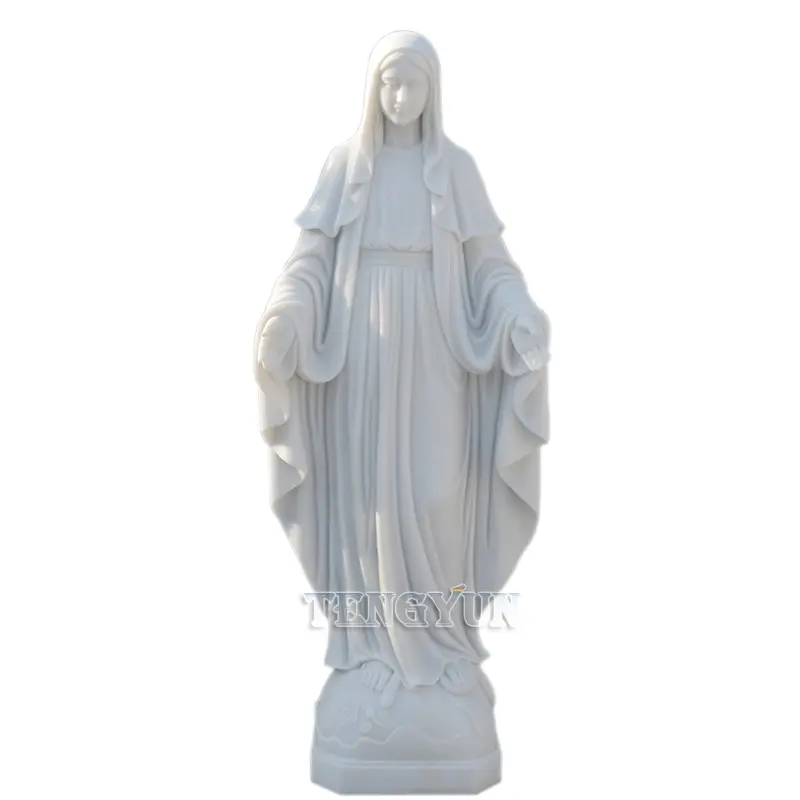
Factors Influencing Your Custom Marble Statue Cost Guide
Securing a high-quality bespoke sculpture requires more than just a budget; it requires an understanding of how material selection and artistic complexity influence the final investment. For those exploring the financial aspects of commissioning a piece, the custom marble statue cost is typically driven by the rarity of the stone, the intricacy of the carving, and the scale of the installation. Whether you are envisioning a neoclassical figure for a private gallery or a large-scale abstract piece for a corporate plaza, the intersection of raw material procurement and skilled labor defines the price point.
At Quyang Tengyun Carving, we leverage over three decades of expertise in the "Hometown of Sculptures" to bridge the gap between artistic vision and fiscal reality. By offering a diverse range of materials—from traditional Carrara-style marble to modern stainless steel—we provide tailored solutions that align with specific project goals. Understanding these variables allows buyers to make informed decisions, ensuring that the final artwork provides lasting aesthetic and commercial value to the environment it inhabits.

Understanding the Primary Drivers of Investment in Bespoke Stone Carving
The cost of a custom sculpture is rarely a flat fee; it is a calculation of several interdependent variables. First and foremost is the material grade. High-purity white marble, prized for its translucency and fine grain, commands a higher premium than colored or veined stones. The source of the stone—whether local or imported from renowned quarries—significantly affects the base cost before a single chisel touches the surface.
Complexity of design is the second major driver. A smooth, abstract form requires different labor hours than a highly detailed figure statue with intricate drapery or anatomical precision. Every fold of fabric or strand of hair in a religious or classical sculpture represents hours of meticulous hand-carving and polishing. Furthermore, the scale of the piece introduces exponential costs, not just in material volume, but in the structural engineering required to ensure the statue's stability and longevity.
- Material Rarity: Premium stones like pure white marble increase raw costs.
- Design Intricacy: High-detail relief or figurative work increases labor hours.
- Scale and Volume: Larger installations require more material and complex logistics.
- Finishing Requirements: High-gloss polishing vs. matte textures affects the final timeline.

Material Alternatives: Comparing Marble with Modern Stainless Steel
While stone is timeless, many modern architects and developers are turning to stainless steel for public art. Stainless steel 304 or 316L offers exceptional corrosion resistance and a contemporary aesthetic that marble cannot replicate. The value proposition shifts from the cost of raw stone to the cost of precision fabrication, mirror polishing, and specialized coatings like electroplating. For instance, a blue-plated abstract sculpture provides a vibrant, high-gloss finish that is ideal for high-traffic outdoor environments or art galleries.
Choosing between these materials often depends on the intended atmosphere. Marble evokes tradition, spirituality, and permanence, making it the standard for religious sculptures and neoclassical monuments. In contrast, stainless steel represents innovation and modernity. From a procurement perspective, stainless steel sculptures are often more durable in extreme weather conditions, reducing long-term maintenance costs compared to the porous nature of some natural stones.
Strategic Applications for High-End Custom Sculptures
The application of a custom sculpture dictates its technical requirements and, consequently, its price. For real estate developments, large-scale abstract pieces serve as landmarks, increasing the prestige and perceived value of the property. In these scenarios, the focus is often on "visual impact" and "material durability," where the sculpture must withstand urban pollutants while remaining a focal point of the landscape.
Indoor ornaments and home decorations, such as marble fireplaces or small figure statues, prioritize "tactile quality" and "detailed craftsmanship." These pieces are often used in luxury residential projects to create a sense of sophistication. Additionally, public squares and government projects—such as the 9m Zeus statue or the Chief statues for the Guam Museum produced by Tengyun—require rigorous structural standards and a deep understanding of cultural context to ensure the artwork resonates with the public.
Comparison of Sculpture Material Characteristics and Procurement Factors
| Material Type | Primary Aesthetic | Durability Factor | Cost Driver |
|---|---|---|---|
| White Marble | Classical/Pure | Medium (Porous) | Stone Grade & Detail |
| Stainless Steel | Modern/Mirror | Very High | Fabrication & Plating |
| Bronze | Traditional/Antique | High (Patina) | Casting Process |
| Fiberglass | Versatile/Light | Medium | Mold Complexity |
| Colored Stone | Unique/Bold | High | Quarry Rarity |
Evaluating Manufacturing Capabilities for Large-Scale Projects
When commissioning a piece, the capability of the manufacturer is as important as the design itself. A professional workshop must possess integrated capabilities, including clay modeling, precision stone carving, and advanced casting for metals. The use of silica sol casting technology, for example, is a critical differentiator in bronze work, as it prevents permanent rust and ensures a finer surface detail that only a few specialized manufacturers can achieve.
Quality control in sculpture is an iterative process. From the initial 3D rendering to the clay prototype and the final carving, each stage must be verified. For international clients, the ability of the supplier to manage the logistics of heavy, fragile artworks—using reinforced wooden cases and specialized shipping—is a vital component of the overall value. A manufacturer with a proven track record of government projects across Europe, Asia, and the Americas provides the necessary assurance of quality and reliability.
Procurement Guidance for Custom Art Installations
To optimize the budget for a custom art project, buyers should focus on a "Value Engineering" approach. This involves analyzing the design to see where complexity can be streamlined without sacrificing visual impact. For example, choosing a more readily available high-quality marble over an ultra-rare variety can significantly lower the custom marble statue cost while still maintaining a luxurious appearance.
It is also recommended to establish clear technical specifications early in the process. This includes the exact dimensions, the desired surface finish (polished, honed, or matte), and the installation environment (indoor vs. outdoor). By providing a detailed design brief, clients can receive more accurate quotes and avoid costly revisions during the production phase. Partnering with a manufacturer that offers a complete design-to-installation service ensures that the final product is synchronized with the surrounding architecture.
Common Inquiries Regarding Custom Sculpture Procurement
What factors most influence the price of a custom stone sculpture?
The primary factors include the grade and rarity of the stone, the size of the piece, the complexity of the carving (detailed figures vs. abstract shapes), and the required surface finish. Larger, more intricate pieces require more raw material and significantly more labor hours.
Is stainless steel a better alternative to marble for outdoor public art?
Stainless steel is generally more durable for outdoor use due to its superior corrosion and heat resistance. It is ideal for modern, abstract designs and requires less maintenance than marble, which can be susceptible to environmental weathering over time.
How do you ensure the quality of a large-scale custom statue?
Quality is ensured through a multi-stage process: initial design renderings, the creation of a clay model for approval, meticulous carving or casting, and a final inspection of the surface finish before secure packaging in strong wooden cases.
Can sculptures be customized based on a rough sketch or a digital 3D model?
Yes, professional manufacturers can translate a client's design, a rough sketch, or a 3D model into a physical sculpture. Expert design teams help refine these ideas into technical drawings to ensure the final product matches the client's vision.
What is the difference between 304 and 316L stainless steel for sculptures?
Stainless steel 316L contains molybdenum, which provides higher resistance to chlorides and corrosion, making it more suitable for coastal environments or highly polluted urban areas compared to 304.
How are heavy stone statues shipped internationally to prevent damage?
Heavy sculptures are secured using custom-built, strong wooden crates designed to distribute weight and prevent movement. For very large pieces, specialized rigging and shipping containers are used to ensure safe transit to the destination.
Professional Resources and Industry Standards
- Getty Conservation Institute - Stone Preservation Standards
- Encyclopedia Britannica - History and Techniques of Sculpture
- International Sculpture Center - Industry Trends and Public Art
- ASTM International - Material Standards for Stainless Steel 304/316L
Investing in custom sculpture is a marriage of artistic ambition and technical precision. By selecting the right materials and a manufacturer with a proven history of global execution, you can ensure that your project transcends mere decoration to become a lasting legacy of art and architecture.
Explore Related Sculptural Artistry and Case Studies