The Enduring Legacy of the Thinker Statue A Symbol of Intellect and Contemplation
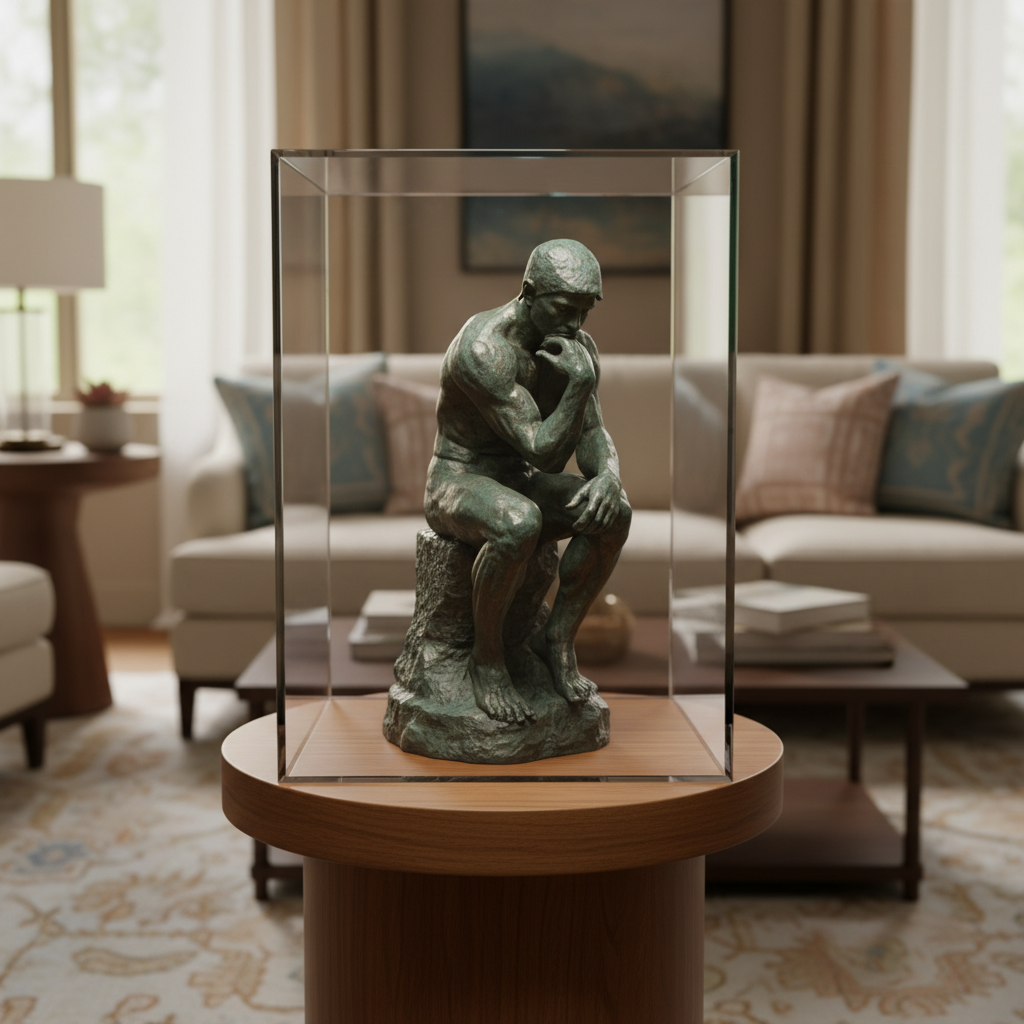
The thinker statue, a bronze sculpture created by Auguste Rodin, stands as a potent symbol of intellect, contemplation, and the human condition. Its globally recognized form transcends artistic boundaries, representing the universal drive for understanding and the struggle with complex ideas. The statue isn’t simply an art piece; it’s a visual representation of the philosophical quest for knowledge that resonates across cultures and throughout history. the thinker statue inspires introspection and fuels artistic expression worldwide.
Rodin’s masterpiece has deeply impacted various fields, from art history to psychology, and its imagery frequently appears in discussions about creativity, problem-solving, and the nature of consciousness. The impact of the thinker statue extends far beyond museum walls, influencing public discourse and serving as an emblem of critical thought. It’s a testament to the power of art to encapsulate profound human experiences.
Understanding the context and symbolism of the thinker statue provides insights into the creative process, the historical period in which it was created, and its enduring relevance in the modern world. The work offers a compelling lens through which to examine the importance of intellectual exploration and the pursuit of meaningful existence, making its continued study essential.
The Historical Development of the thinker statue
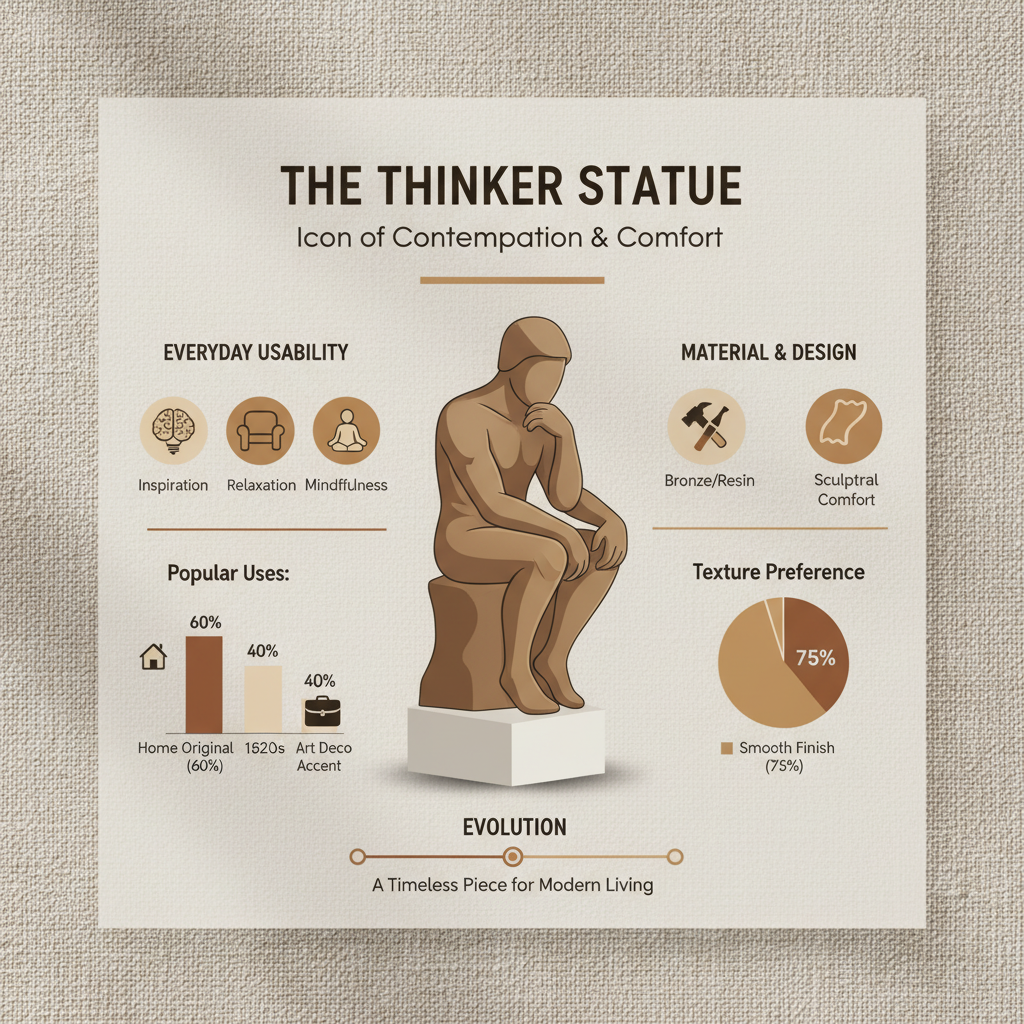
Originally conceived in 1880 as part of Rodin’s monumental “The Gates of Hell,” the thinker statue initially depicted Dante Alighieri, author of the Divine Comedy, contemplating the suffering of the damned. It wasn’t intended as a standalone piece but rather a critical element within a larger narrative. This early context significantly informed its expressive power.
Over time, the figure evolved, becoming less specifically Dante and more a universal representation of thought. Rodin exhibited the thinker statue independently in 1888, and it quickly gained recognition for its powerful emotional resonance and innovative departure from traditional sculptural conventions. Its development illustrates a progression from specific narrative to universal symbolism.
FAQS
The thinker statue, originally conceived as part of Rodin's "The Gates of Hell," evolved from a depiction of Dante Alighieri to a universal symbol of contemplation. Its creation in the late 19th century marked a departure from traditional sculptural conventions, embracing a more expressive and psychologically insightful style. Its influence extends to art, philosophy, and popular culture, representing the enduring power of human thought and the complexities of existence. The statue reflects Rodin’s response to the intellectual and artistic movements of his time, making it a significant landmark in art history.
The most famous versions of the thinker statue are cast in bronze. However, Rodin also created plaster and marble versions. Bronze was chosen for its durability and ability to capture the intricate details of the sculpture. The bronze is often treated with a patina to enhance its color and protect it from corrosion. Plaster versions were often used as study models, while marble versions, though less common, showcase a different texture and aesthetic quality. The material directly impacts the visual and tactile experience of the artwork.
Rodin was inspired by Dante Alighieri's Divine Comedy when initially creating the figure for "The Gates of Hell". He intended to represent Dante contemplating the suffering of the damned. However, as he worked on the sculpture, it evolved into a more universal representation of thought and contemplation, independent of its original context. Rodin was also influenced by his studies of anatomy and his desire to capture the expressive power of the human body, moving away from idealized forms to embrace realism and emotional depth.
Interpretations of the thinker statue have varied greatly over time. Initially, it was seen as a representation of Dante, then as a symbol of intellectual struggle. Later, it became a more universal icon of philosophical thought and the human condition. Different cultures and generations have attributed their own meanings to the statue, reflecting their values and beliefs. Some view it as optimistic, others as melancholic, highlighting its ambiguous and multifaceted nature.
Bronze thinker statues require regular cleaning to remove dirt and pollutants. A protective wax coating should be applied annually to prevent corrosion. Indoor exhibits should maintain stable climate control to minimize environmental damage. Periodic professional conservation assessments are crucial to identify and address any potential issues. Digital scanning and documentation help preserve the statue's condition for future generations, safeguarding its cultural heritage.
Original casts of the thinker statue can be found in several prominent museums worldwide. Notable locations include the Musée Rodin in Paris, France; the Metropolitan Museum of Art in New York City, USA; and the Philadelphia Museum of Art, USA. Other museums with casts include the Kunstmuseum Basel in Switzerland and the National Gallery of Art in Washington, D.C. Checking the museum websites for current exhibitions is recommended before visiting.
Conclusion
The thinker statue remains a powerfully resonant symbol of human intellect, contemplation, and the enduring quest for meaning. Its historical development, artistic techniques, and philosophical significance combine to create a work of art that transcends time and culture. From its origins as part of “The Gates of Hell” to its status as a universally recognized icon, the statue continues to inspire and provoke thought.
Looking ahead, the thinker statue’s legacy will undoubtedly continue to shape artistic expression and philosophical discourse. Its image will likely be reinterpreted and reimagined by future generations, ensuring its continued relevance in an ever-changing world. To learn more about Rodin's masterpieces and explore the world of sculpture, visit our website: www.firststatue.com
Post time:Mar . 11, 2026 12:19