Premium standing buddha statue Solutions for Afghanistan

Bridging ancient spiritual artistry with modern manufacturing precision to elevate architectural and residential spaces across Asia.

The State of Sculpture Manufacturing in Afghanistan

Analyzing the intersection of cultural heritage and modern demand for home decor statues.

The sculpture industry in Afghanistan is currently in a transitional phase, where the deep-rooted tradition of stone carving meets a rising demand for diversified statue decor. Due to the region's extreme temperature fluctuations and arid climate, there is a critical need for materials that resist thermal expansion and erosion, shifting the market toward reinforced resins and high-grade alloys.

Economically, the market is seeing a surge in private residential luxury projects in urban centers like Kabul. This has led to an increased preference for art sculptures for home that blend regional Gandhara-style influences with contemporary minimalist designs, creating a unique niche for hybrid craftsmanship.

However, the local manufacturing sector faces challenges in precision tooling. The reliance on manual labor, while preserving the "soul" of the art, often results in inconsistencies. This creates a significant opportunity for industrial-grade precision casting that maintains the artistic integrity of traditional Afghan motifs.
Evolution and Trajectory of Afghan Art Sculpture

From ancient rock-cut heritage to the era of precision industrial manufacturing.

Market Development History

Historically, Afghan sculpture was dominated by the Gandhara period (1st century BCE to 7th century CE), where stone carving reached a pinnacle of spiritual expression. For centuries, the technique remained static, focusing on religious monuments and temple architecture using local schist and limestone.

By the mid-20th century, the transition toward decorative arts began. Small-scale workshops started producing miniatures, but the lack of advanced metallurgy limited the variety of materials. The focus remained on traditional motifs, with very little influence from global modernism.

Since 2010, the integration of CNC milling and 3D modeling has revolutionized the process. The transition from "purely manual" to "tech-assisted" has allowed for the creation of complex modern sculpture art that retains classical proportions while achieving mathematical perfection in symmetry.

Future Development Trends

Digital Twin Sculpting

The adoption of VR-based design will allow Afghan clients to visualize massive installations in their physical space before the casting process begins, reducing material waste.

Sustainable Composite Materials

A shift toward eco-friendly, UV-resistant polymers to replace heavy stone for indoor home decor statues, ensuring longevity against the intense Afghan sun.

Hybrid Cultural Fusion

An increasing trend in "Neo-Gandhara" styles, combining ancient Buddhist and Islamic geometric patterns into contemporary abstract forms.

Industry Outlook and Technological Forecast

Predicting the next 5 years of sculpture innovation in the Central Asian corridor.

AI-Driven Design Optimization
Utilizing AI to analyze structural stress points in large-scale statues to ensure stability in earthquake-prone Afghan zones.
Advanced Alloy Casting
Implementation of vacuum casting for zero-bubble finishes in premium metal statue decor.
Customized Ergonomic Scaling
Scaling art sculptures for home based on specific Afghan architectural ceiling heights.
Smart Lighting Integration
Embedding fiber-optic lighting within sculptures to enhance spiritual ambiance in dim interior settings.

Industry Outlook

Based on Google search trends in the region, there is a growing interest in "sustainable luxury" and "cultural heritage restoration." This indicates a shift toward high-value, low-volume production where each piece tells a story of Afghan resilience and artistic rebirth.

Over the next 3-5 years, the market will move away from mass-produced imports toward bespoke, locally-relevant art. The synergy between traditional Afghan hand-finishing and global precision manufacturing will define the new standard for luxury interiors in the region.

Localized Application Scenarios in Afghanistan

Integrating artistic sculpture into the unique fabric of Afghan life and architecture.

01. Luxury Residential Courtyards in Kabul

Installing monumental modern sculpture art as centerpieces in private courtyards, designed to withstand the high UV index of the region while providing a serene focal point.

02. Corporate Lobby Installations

Implementing large-scale abstract figures in the lobbies of emerging financial institutions to symbolize growth, stability, and the fusion of tradition with global commerce.

03. Spiritual Meditation Rooms

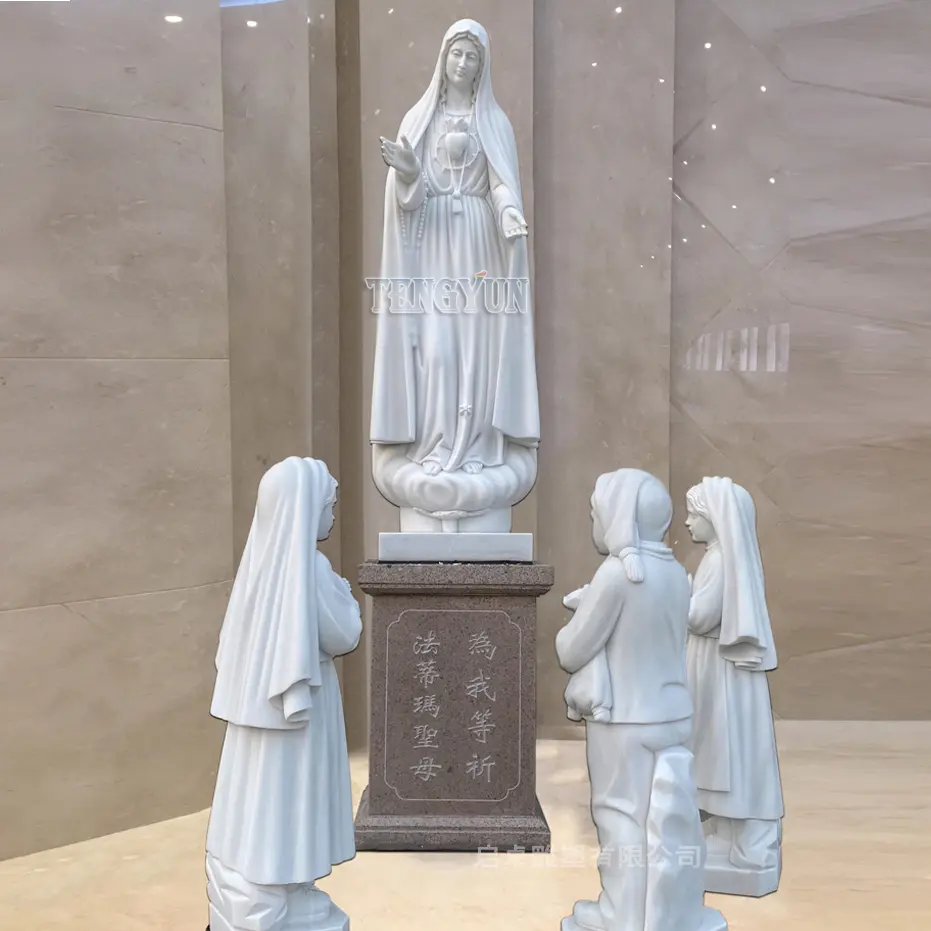
Providing meticulously crafted standing buddha statue pieces for private meditation spaces, focusing on serene expressions and tactile finishes that promote tranquility.

04. Boutique Hotel Interior Decor

Using a curated collection of home decor statues to create a "Heritage Gallery" feel in high-end hotels, attracting international tourists with local aesthetic appeal.

05. Government and Diplomatic Gardens

Designing symbolic sculptures for official gardens that represent peace and diplomatic unity, utilizing durable bronze and granite for permanent outdoor placement.

Brand Story

Global Development Journey of Quyang Tengyun Carving Co., Ltd.

Founding Excellence

Established in the heart of China's carving capital, we began with a mission to solve the conflict between mass production and artistic soul in sculpture manufacturing.

Technological Breakthrough

We pioneered the integration of 5-axis CNC machining with traditional hand-carving, reducing error margins to 0.1mm without losing artistic fluidity.

Global Expansion

Expanding into Central Asia and Afghanistan, we adapted our materials to survive extreme climates, becoming a trusted partner for regional luxury projects.

Artistic Diversification

We evolved from traditional figures to modern sculpture art, catering to a new generation of global collectors and architects.

Vision for the Future

Our mission is to continue bridging cultural divides through art, ensuring that every statue we produce serves as a timeless legacy of human creativity.

Common Questions Regarding Statue Art in Afghanistan

Expert guidance on selection, maintenance, and logistics for regional clients.

Which materials are best for outdoor statue decor in Afghanistan's climate?

We recommend high-grade bronze or reinforced weather-resistant resin. These materials withstand extreme temperature swings and arid wind erosion typical of the Afghan plateau.

Can I customize the scale of art sculptures for home?

Yes, we provide full bespoke scaling services. Using 3D scanning, we can adjust the proportions of any design to fit perfectly within your specific architectural dimensions.

How do you ensure the authenticity of a standing buddha statue?

Our artisans study classical Gandhara proportions and use traditional iconography combined with precision casting to ensure spiritual and historical accuracy.

What is the lead time for delivering modern sculpture art to Kabul?

Depending on the complexity, production takes 4-8 weeks. Shipping and customs clearance for Afghanistan typically add another 3-5 weeks via specialized art logistics.

How should I maintain home decor statues in dusty environments?

We recommend a soft-bristle vacuuming followed by a microfiber cloth wipe. For outdoor pieces, a yearly application of a UV-protective sealant is advised.

Do you offer installation services for large-scale sculptures?

We provide detailed installation blueprints and can coordinate with local Afghan engineering teams to ensure safe and secure anchoring of large pieces.

Begin Your Artistic Journey

Ready to transform your space in Afghanistan with timeless artistry? Our experts are available for consultation on all custom sculpture projects.

Contact Us Now

If you are interested in our products, you can choose to leave your information here, and we will be in touch with you shortly.