Stone Pavilion Types and Guide
Stone pavilions have been admired for centuries for their beauty, durability, and ability to enhance outdoor spaces. They serve both functional and decorative purposes, providing shelter, a gathering spot, and a visual focal point in gardens, parks, and estates. Understanding the different types of stone pavilions is crucial when selecting the right one. This guide explains classifications based on size, design complexity, shape, and column type, helping you make an informed decision that blends style with functionality.
Choosing the Right Size for Garden Gazebos
When planning your outdoor space, the size of the pavilion is one of the first considerations. Garden gazebos are available in a variety of dimensions, ranging from compact shelters for two to three people to expansive pavilions that can host large gatherings. A small garden gazebo may measure 6–8 feet in diameter, ideal for intimate seating or a quiet reading nook. Medium structures, typically 10–12 feet wide, can accommodate family gatherings, tea parties, or small outdoor events. Larger pavilions, 14–16 feet or more, are suitable for formal garden areas or spaces where multiple seating arrangements are needed.
The footprint of the garden gazebo should complement the surrounding landscape. A pavilion that is too large can overpower a small garden, while a tiny structure may feel lost in a vast outdoor space. Height is equally important: a pavilion with a higher ceiling creates a sense of openness and grandeur, while a lower roof provides a cozier, more intimate feel. Stone pavilions, in particular, combine elegance with durability, making them an excellent long-term investment for outdoor spaces.
Comparing Metal Gazebos for Sale and Stone Alternatives
To understand the unique benefits of stone, it’s useful to compare with metal gazebos for sale. Metal structures are often lighter, easier to transport, and faster to assemble. They are available in modern, minimalist designs and can be painted in a variety of colors to match your garden theme. However, metal gazebos may require frequent maintenance to prevent rust or fading, particularly in humid or coastal environments.
Stone pavilions, by contrast, offer a permanent, weather-resistant solution. A well-crafted stone structure resists wind, rain, and UV damage, and requires minimal upkeep over the decades. Choosing between metal gazebos for sale and stone depends on your priorities: portability and affordability versus long-term durability and classical aesthetics. Stone pavilions also offer greater versatility in design, from intricate carvings to ornate columns, giving your garden a timeless look.
Enhancing Outdoor Spaces with a White Gazebo for Sale
A white gazebo for sale is a popular choice for homeowners seeking elegance and visual impact. White stone pavilions, crafted from marble, limestone, or light-colored granite, can replicate the clean, classic look of painted gazebos while providing superior durability. The bright color accentuates carved details, making decorative elements more visible and creating a focal point in your garden.
When selecting a white gazebo for sale, consider the garden’s overall palette. Light-colored stone pairs beautifully with lush greenery, colorful flowers, and water features. In formal gardens, a white stone pavilion can serve as the centerpiece for symmetrical layouts or courtyards. For more naturalistic landscapes, it can act as a bright contrast, drawing the eye to shaded corners or quiet seating areas. Stone ensures the pavilion remains attractive and structurally sound for decades, unlike wood or metal alternatives that may require frequent repainting or repairs.
Selecting the Best Garden Gazebo Shapes for Your Space
The shape of a garden gazebo significantly influences both its aesthetics and functionality. Common shapes include round, square, rectangular, and octagonal. Round pavilions are ideal for social interaction because they create a central focal point, allowing people to face each other comfortably. Octagonal shapes combine symmetry with visual interest, making them suitable for both formal and casual gardens.
Square and rectangular pavilions are practical in narrow or linear spaces, fitting neatly along pathways or against walls. Larger rectangular pavilions can accommodate multiple seating areas or dining arrangements. The shape also affects roof design: round and octagonal pavilions often feature conical or domed roofs, while square or rectangular structures use flat or pitched roofs. Stone garden gazebos allow for creative roof styles and structural variations that enhance the garden’s visual appeal and provide durable shelter.
Columns are a defining feature of stone pavilions, affecting both style and structural support. Classical designs often use Doric, Ionic, or Corinthian columns, each with distinct characteristics. Doric columns are simple and sturdy, ideal for a minimalist, timeless look. Ionic columns are slender with decorative scrolls, offering elegance without overwhelming the design. Corinthian columns are highly ornate, featuring acanthus leaves or detailed carvings, perfect for grand, formal gardens.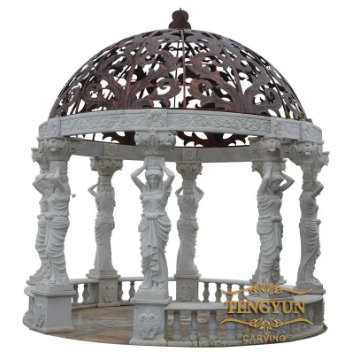
Modern stone pavilions may use square, cylindrical, or tapered columns with minimal ornamentation, emphasizing clean lines and structural simplicity. The type of column selected should match the pavilion’s size, shape, and intended use. A pavilion with intricate carvings may require more decorative columns, while a minimalist stone gazebo benefits from simpler support structures. Properly chosen columns enhance both durability and visual harmony, ensuring the pavilion complements the surrounding landscape.
Stone pavilions vary widely in design complexity. Simple pavilions feature straightforward rooflines, minimal carvings, and basic column structures, making them easier to construct and maintain. More complex pavilions include multi-tiered roofs, decorative railings, and detailed relief work. High-complexity designs often incorporate custom stone carving, intricate latticework, and ornamental details on the roof and columns.
When selecting a pavilion, consider the balance between aesthetic complexity and practical needs. A highly ornate stone pavilion creates a luxurious focal point but may require professional installation and higher maintenance. Simple designs are easier to integrate into casual gardens or small spaces while still providing the durability and elegance of stone.
FAQs on Stone Pavilions
What Is the Ideal Size for a Garden Gazebo?
The ideal size depends on intended use. Small pavilions suit intimate seating, while larger structures accommodate parties or gatherings. Standard diameters range from 6 to 16 feet, with custom sizes available.
How Do Metal Gazebos Compare to Stone Pavilions?
Metal gazebos are lighter, easier to move, and often less expensive. Stone pavilions are more durable, low-maintenance, and provide a timeless, permanent presence in the landscape.
Can I Find a White Gazebo for Sale in Stone Material?
Yes. White stone options such as marble or limestone replicate the aesthetic of painted metal or wooden gazebos while offering superior longevity and minimal upkeep.
Which Shapes Work Best for Social Interaction?
Round and octagonal pavilions encourage conversation and circulation, while square or rectangular structures suit formal layouts or narrow garden spaces.
What Column Types Are Common for Stone Pavilions?
Classical columns (Doric, Ionic, Corinthian) are common for traditional designs. Modern stone pavilions often use square or cylindrical columns with minimal ornamentation for simplicity and clean lines.
Post time:জানু. . 20, 2026 15:40